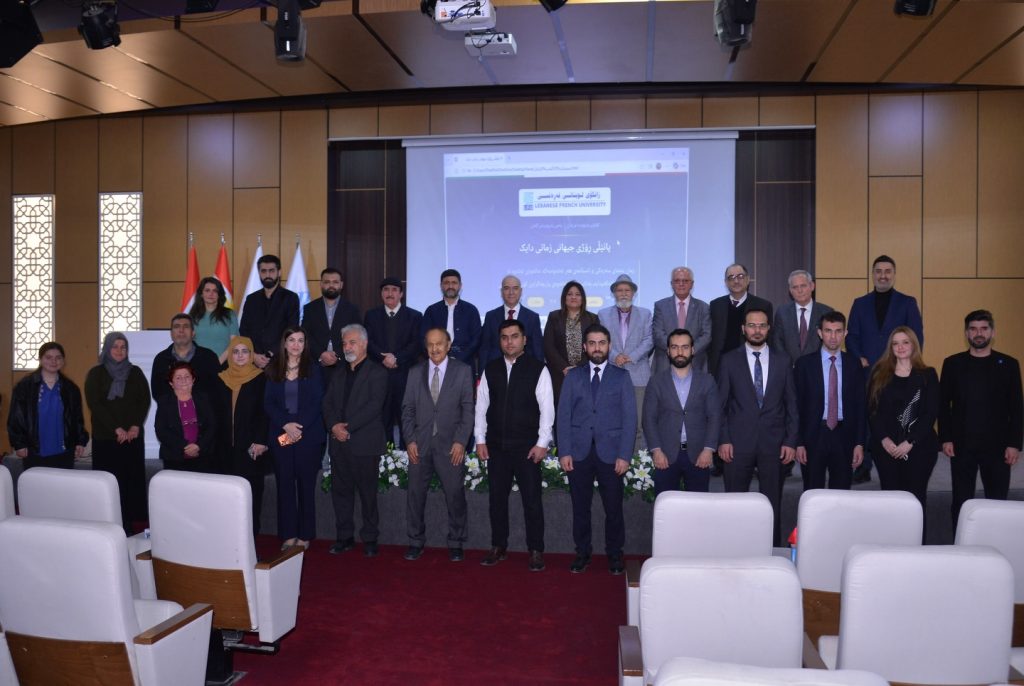
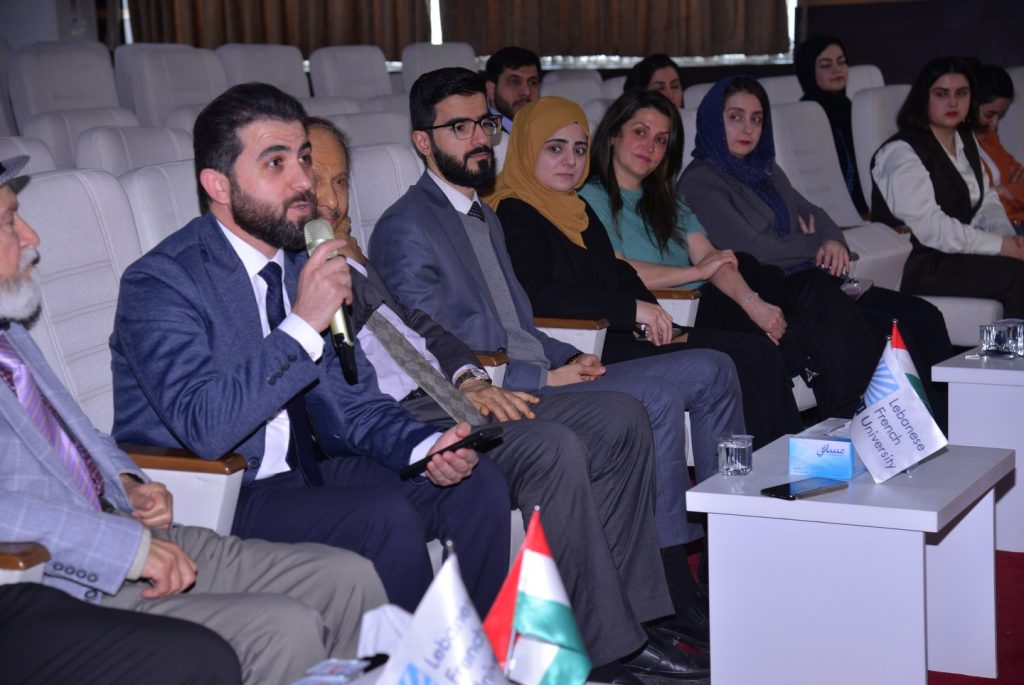
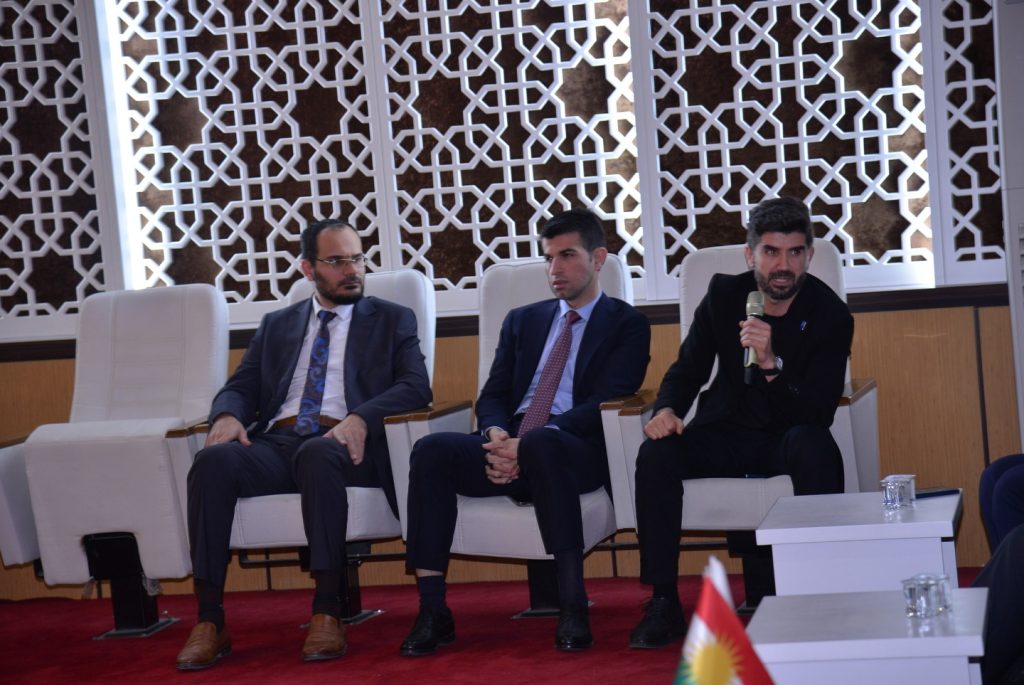
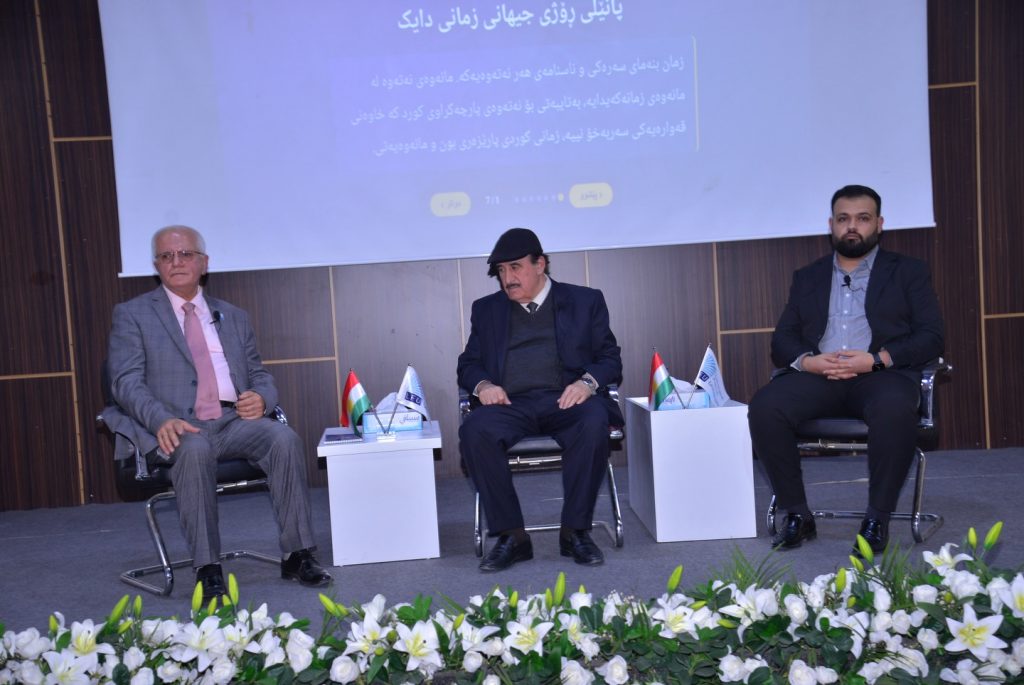
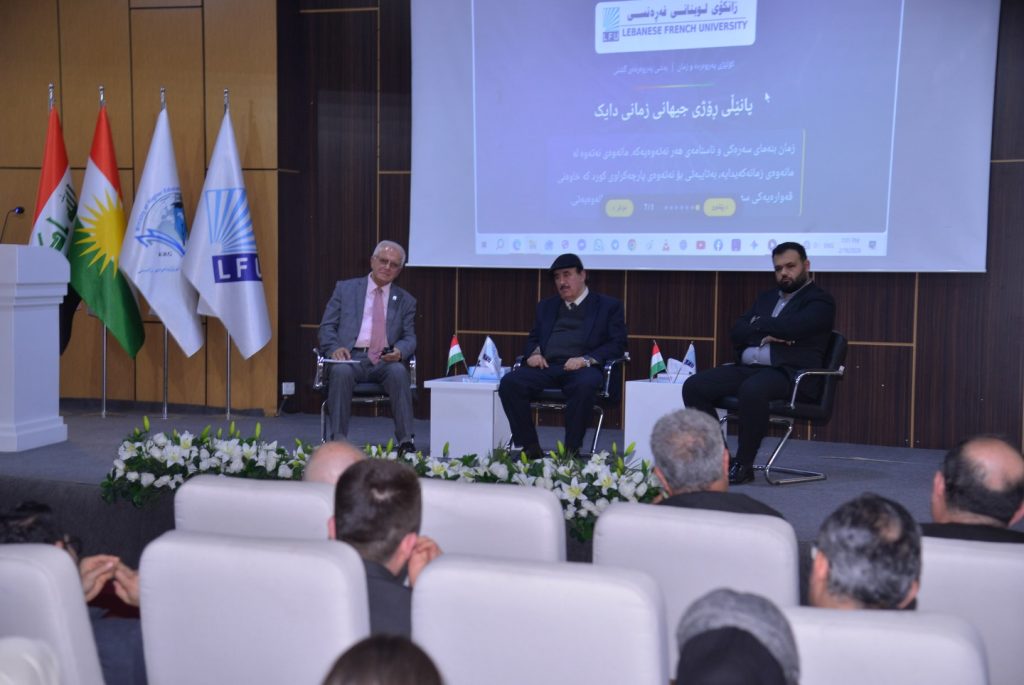
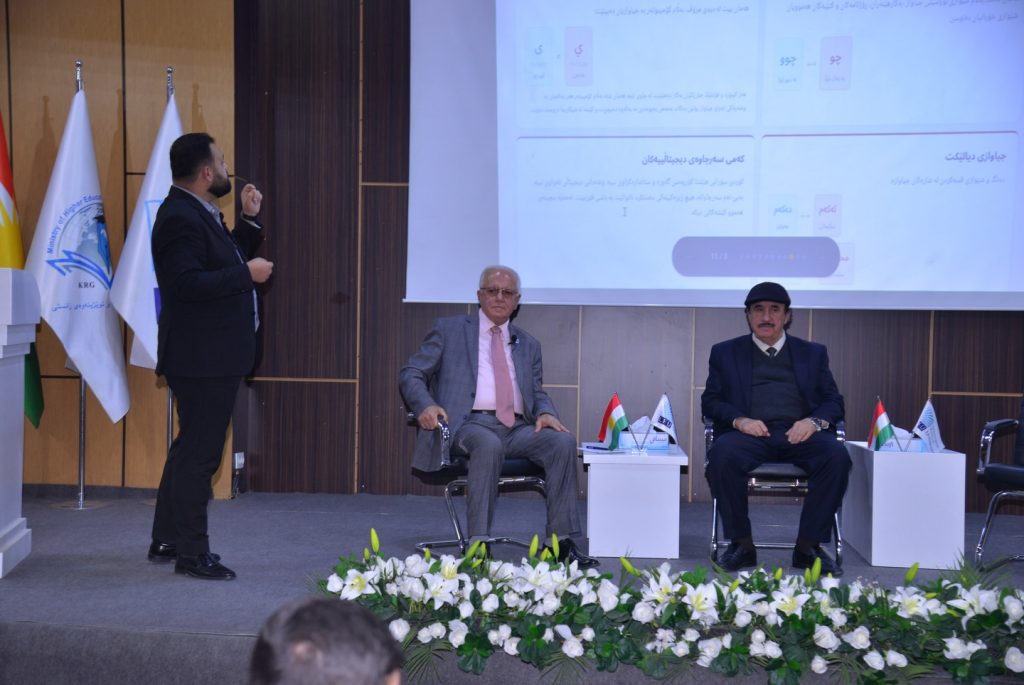
I had the honour of being a panelist at Lebanese French University’s International Mother Language Day event, held here in Erbil. My session was titled “Mother Tongue and Artificial Intelligence: Can AI Enhance the Standardization of Kurdish Sorani?”
I want to share what I talked about, and more honestly, what the experience made me think about.
The Question That Started Everything
I opened with a simple provocation to the audience:
“If I write the same word five different ways, who decides which one is correct?”
I was talking about Kurdish Sorani. The word چوو and چو. The word دوەم and دووەم. Two letters that look identical on screen — ی and ي — but are stored as completely different codes inside a computer (U+06CC and U+064A), meaning the computer treats them as entirely different characters.
These are not exotic edge cases. These are problems every Kurdish writer, teacher, and software developer faces every single day.
What I Actually Argued
My talk was really about two things sitting in tension with each other.
On the surface, it looked like a talk about AI as a solution. I walked the audience through what researchers call an NLP pipeline; normalization, morphological analysis, part-of-speech tagging, spell-checking, corpus building, and automatic speech recognition. Six steps that, in theory, form a chain of tools capable of helping standardize any language digitally.
But underneath that, and I was honest about this with the audience, the talk was really about the problems Kurdish Sorani still faces before AI can meaningfully help.
Kurdish Sorani lacks a large, standardized digital corpus. Its morphology is genuinely complex — the same suffix ی can mean three completely different things depending on context. Its speakers in Erbil and Sulaymaniyah pronounce and write the same words differently. And perhaps most importantly, the policy decisions, who decides what “correct” Kurdish looks like, are still being made and are not yet uniformly applied.
I said something in the conclusion that I meant sincerely:
“AI gives us tools our grandparents never had. But the decision belongs to us — not the machine.”
Technology can enforce a standard at scale. It cannot choose what the standard should be. That choice belongs to institutions, communities, and speakers.
A Moment That Stuck With Me
During the preparation for this talk, I found myself thinking about the KRG’s recent decision to standardize the single و, ruling that words like چوو should be written as چو, because the doubling adds no meaning.
It sounds like a small thing. One letter. But what struck me was this: that decision, made by a government body, can now be scaled across millions of documents, spell-checkers, and AI training sets if we build the right tools. A decision that once required an editor’s red pen on every page can now, in principle, be applied consistently and automatically.
That is the genuine promise of AI for Kurdish, not replacing human judgment, but multiplying its reach.
What Comes Next
I left the panel feeling a mix of excitement and urgency. The tools exist. The academic literature is growing, and researchers are building Kurdish NLP toolkits, pronunciation lexicons, and morphological analyzers. But the foundational work, building a large, balanced, standardized corpus of Kurdish Sorani text, is still largely undone.
That is the most important step. Without it, everything else is built on unstable ground.
If you are a Kurdish writer, journalist, academic, or educator reading this, your texts matter. Digitizing them, normalizing them, contributing them to shared linguistic resources is not a small act. It is the raw material from which the digital future of our language will be built.
Thank You
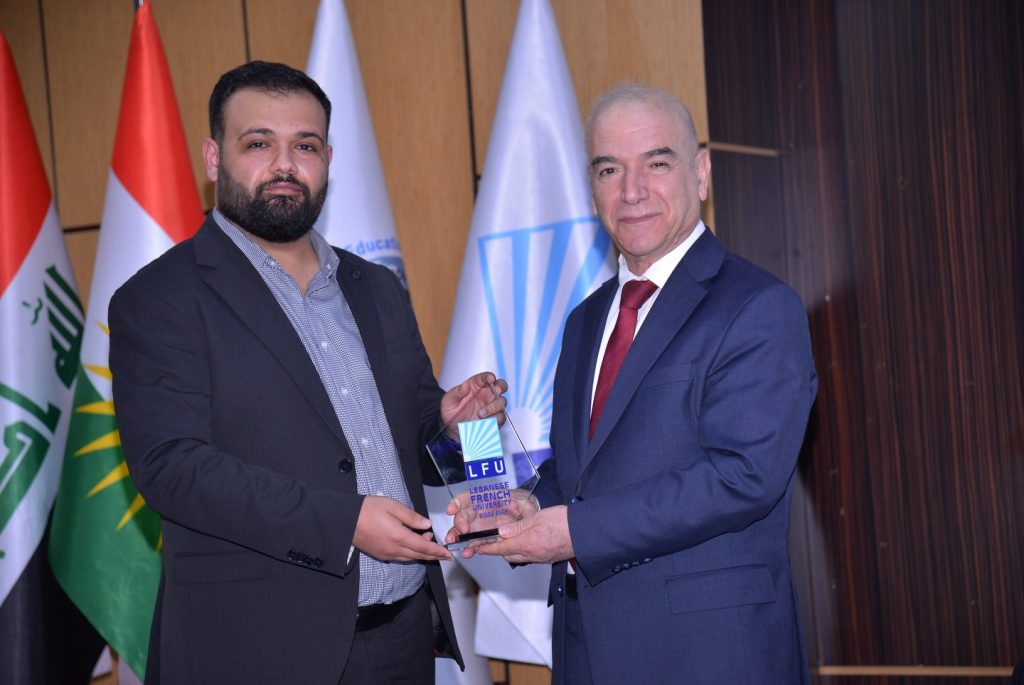
To the Lebanese French University for hosting this event and giving me the opportunity to speak. To the audience, students, and academics alike, for the thoughtful questions and engagement. And to everyone working quietly on Kurdish language technology: your work is seen, and it matters.
Happy International Mother Language Day.

0 Comments